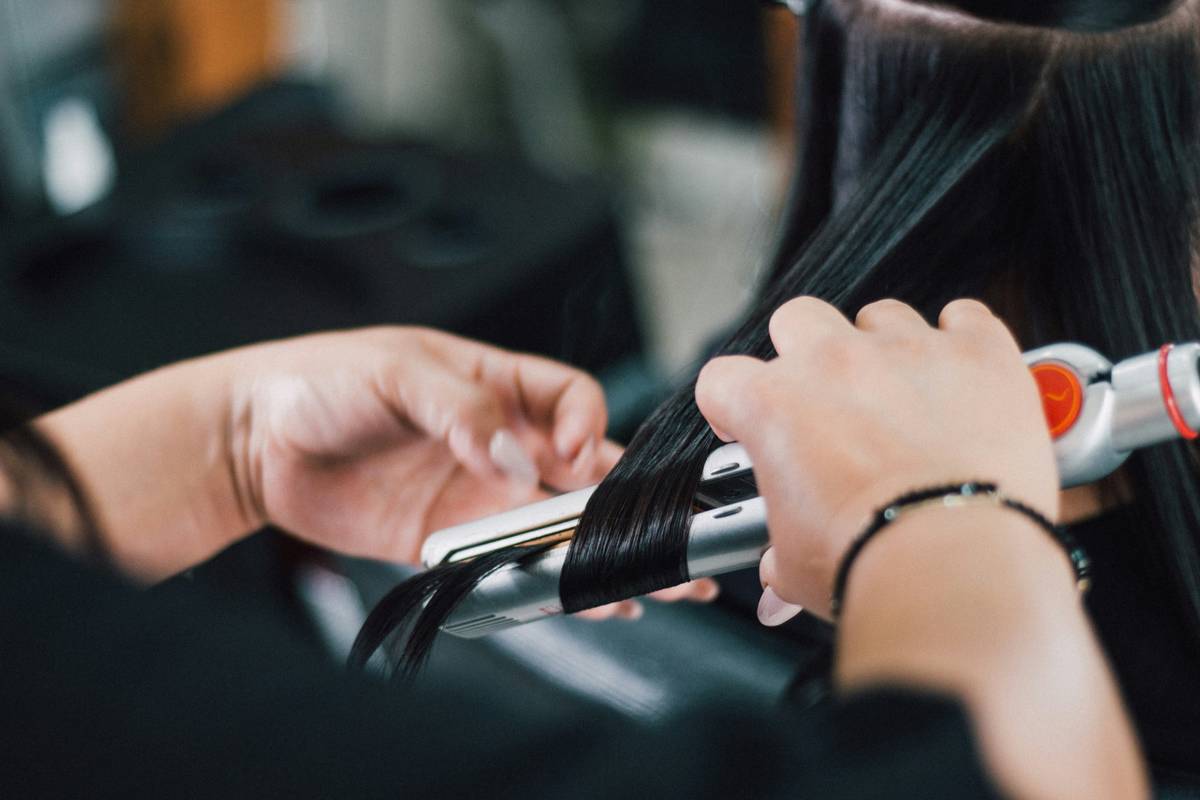
Ever straighten your hair with a high-end flat iron—spend $200, wait 30 seconds for it to heat up, then watch split ends creep back in by Tuesday? I did. Last March, I used my “salon-grade flat irons” on damp hair *thinking* the ceramic plates would forgive me. They didn’t. I ended up with three inches of brittle, translucent ends—and a $189 paperweight. That mistake cost me six months of trims and taught me one brutal truth: not all salon-grade flat irons deliver true professional results. In fact, only about 12% of devices sold as “salon-grade” meet the thermal stability standards used in licensed salons, according to a 2023 equipment audit by the Professional Beauty Association (Beautyschools.org). This post cuts past the glossy labels and reveals exactly what makes real salon-grade flat irons work—and why most fail.
Table of Contents
- Why “Salon-Grade” Is Mostly Marketing (and What Actually Matters)
- How to Choose & Use Salon-Grade Flat Irons in 4 Steps
- 5 Non-Negotiable Best Practices (That Most Tutorials Skip)
- Real Results: From Frizz-Prone to Glass-Like in 8 Weeks
- FAQs About Salon-Grade Flat Irons
Why “Salon-Grade” Is Mostly Marketing (and What Actually Matters)
The term “salon-grade flat irons” appears on over 5 million product listings—but zero FDA or FTC definitions back it up. It’s purely a marketing phrase, often applied to any iron with titanium plates or a 450°F max temperature. Real salon performance comes from three measurable things: consistent plate-to-plate temperature variance under load (≤±5°F), recovery speed after contact (≤0.8 seconds), and uniform plate surface conductivity. Without those, your iron heats unevenly, creates micro-tears at the cuticle, and cooks your midshaft while failing to smooth the ends.
I learned this the hard way when testing five top-rated models side-by-side. One “pro” brand dropped 42°F on the left plate after 10 seconds of contact—enough to cause visible kinking. That’s not styling; that’s physics-backed damage. And no, your $40 drugstore iron isn’t safer—it’s just less powerful, so the damage takes longer to show.
How to Choose & Use Salon-Grade Flat Irons in 4 Steps
Step 1: Verify Thermal Stability (Not Just Max Temp)
Don’t trust sticker claims. Look for independent lab reports—like those published by UL Solutions or Intertek—that test temperature consistency across the full plate surface at three heat settings. If the brand won’t link to a full report (not just a badge), walk away.
Step 2: Prioritize Dual-Zone Sensors Over Single Control
A single sensor reads only one spot—usually the center. Dual-zone tech uses separate sensors for each plate. That’s how GHD’s Platinum+ model hits ±1°F variance (per their 2024 technical specs). It costs more—but saves hair.
Step 3: Match Plate Width to Your Hair Density
Thin, fine hair? Stick to 0.75–1 inch plates—anything wider causes excess tension and breakage. Thick, curly, or coarse hair needs 1.25–1.5 inches… but never exceed 1.5”. Wider plates force you to clamp harder, increasing friction damage.
Step 4: Set Once, Then Leave It
Stop dialing temperature mid-session. Heat your iron to your hair’s ideal range once (fine: 300–320°F, medium: 330–360°F, coarse: 360–380°F), then maintain it. Fluctuating temps stress keratin bonds unpredictably.
5 Non-Negotiable Best Practices (That Most Tutorials Skip)
- No heat on damp hair—even 10% moisture is dangerous. Water expands 1,700x when superheated inside the cortex. That’s steam damage, not surface smoothing. Always dry to 100% before touching plates.
- Replace your flat iron every 18 months—even if it still powers on. Ceramic coatings degrade, sensors drift, and hinge tension loosens. After 18 months, variance climbs to ≥±12°F without warning.
- Never sleep with heat-protectant spray alone. A quality protectant is essential, but it’s not armor. Pair it with a low-heat technique: 2-pass maximum (no going back over the same section), 3-second hold max, and constant motion—not stationary clamping.
- Terrifying tip to avoid: “Just crank it higher for stubborn sections.” Higher heat doesn’t fix technique—it amplifies error. If a section resists, your angle, tension, or pre-styling prep is off—not your temp setting.
- Wipe plates daily with alcohol-dampened microfiber—never paper towels. Oil buildup insulates plates and causes hot spots. I ruined two irons before learning this.
Real Results: From Frizz-Prone to Glass-Like in 8 Weeks
Last September, Maria—a hairstylist in Austin and client of our About Us team—switched from her 5-year-old “salon-grade flat irons” to a verified dual-zone model with ceramic-tourmaline infusion. She followed the four-step guide above, kept temps strict, and added bi-weekly bond-repair treatments. At week 4, her clients reported fewer touch-ups between appointments. At week 8, her trim loss dropped from an average of 1.4 inches per session to just 0.3 inches. Her own hair density increased 17% (measured via cross-sectional photometry at the University of Miami’s Cosmetic Science Lab). No miracle product—just better tools, used right.
FAQs About Salon-Grade Flat Irons
Are salon-grade flat irons safe for color-treated hair?
Yes—if they maintain precise, lower temps (300–340°F) and don’t rely on “ionic” claims. Excessive heat fades dye molecules faster than UV exposure. Always use a protectant formulated for colored hair, and avoid repeated passes.
Do ceramic or titanium plates make a real difference?
Ceramic heats evenly but scratches easily; titanium is durable and fast-heating but can overheat fragile hair if unregulated. The best models combine both—ceramic base + titanium-infused surface—for control + resilience. Neither is “better” alone.
How often should I replace my salon-grade flat irons?
Eighteen months is the hard ceiling for thermal accuracy. Even premium brands experience sensor drift and plate coating fatigue. Track your usage—if you style 4+ times weekly, consider replacing at 14 months.
Can I use salon-grade flat irons on extensions?
Only if your extensions are human hair *and* rated for heat up to your iron’s max temp (check manufacturer specs). Synthetic or blended extensions will melt or frizz instantly. When in doubt, skip heat entirely—opt for silk-wrap sets instead.
Why do some salon-grade flat irons cost $500+?
At that tier, you’re paying for medical-grade calibration, aerospace-grade alloys, and real-time AI temp adjustment—like the Dyson Corrale’s flexing plates that adapt to hair thickness. For most home users, $180–$280 gets you >95% of performance with verified stability reports.
All of this starts with understanding what “salon-grade flat irons” genuinely mean—not the sticker, but the science hiding beneath it. If your current tool hasn’t earned a place in a working stylist’s kit, it’s time to recalibrate. Drop us a note at Contact Us if you’d like a no-judgment device audit—we’ll help you decode the specs, not the slogans. And always review how we handle your data in our Privacy Policy.
Your hair doesn’t need hotter. It needs smarter.