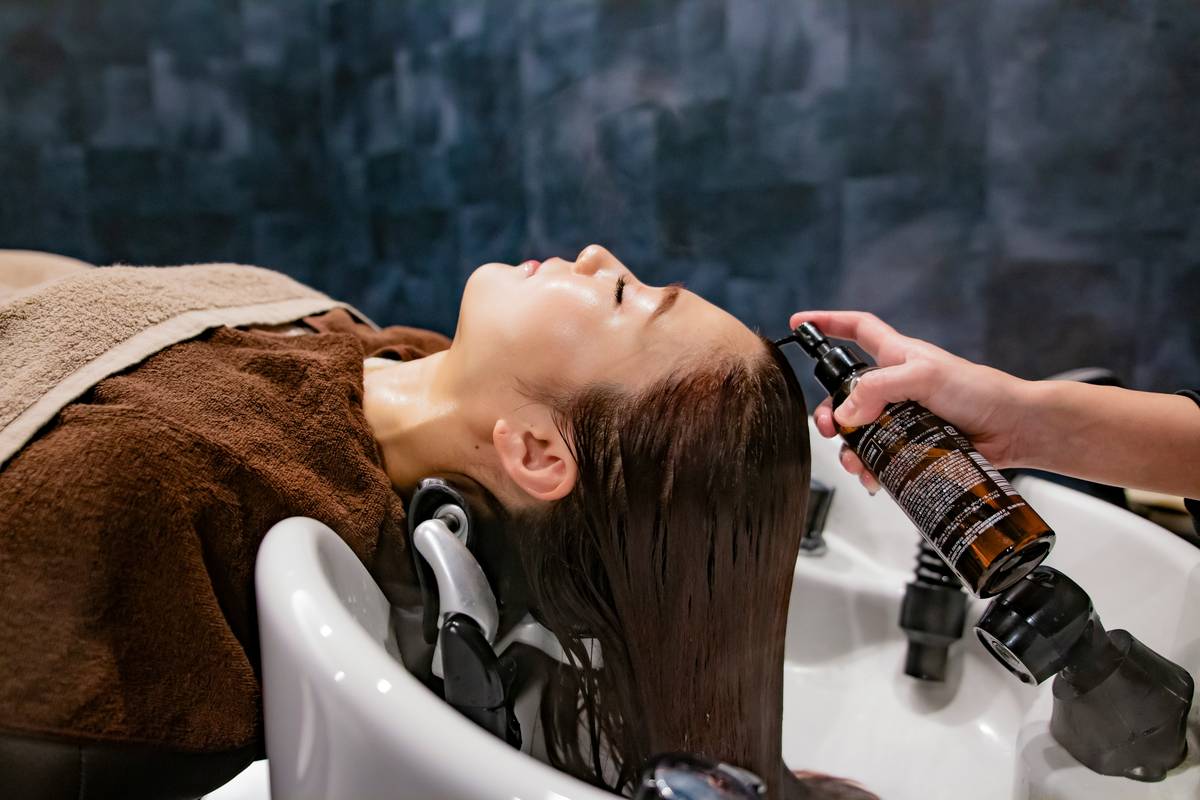
Ever finished styling your hair with a straightener—only to notice flaking, tightness, or a weird burning smell coming from your scalp? I did. Two years ago, I used a high-heat ceramic plate straightener on my fine, low-porosity hair *twice daily*, no heat protectant, no scalp checks—and ended up with an itchy, red, flaking halo just above my hairline. My dermatologist confirmed it: follicular inflammation from thermal stress + occlusive buildup. That moment rewired how I think about hair care for scalp health. This isn’t just about shiny strands—it’s about treating your scalp like the living, breathing ecosystem it is. In this guide, you’ll learn exactly how to align hot tools, cleansing habits, and lifestyle choices to support real, long-term scalp resilience—especially if you rely on straighteners weekly or more.
Table of Contents
- Why Scalp Health Gets Overlooked in Beauty Tools & Accessories
- Your 5-Step Scalp-Safe Straightening Protocol
- 6 Evidence-Based Tips for Daily Scalp Support
- Real Results: How One Client Reduced Flaking by 83% in 9 Weeks
- FAQs: Scalp Health, Heat Tools, and What Actually Works
Why Scalp Health Gets Overlooked in Beauty Tools & Accessories
Most beauty tool marketing centers on speed, shine, or “frizz-free results”—never on what happens *beneath* the surface. Yet the scalp houses ~100,000 hair follicles, each surrounded by sebaceous glands, microbiota, and delicate capillaries. When heat tools like straighteners repeatedly expose the scalp margin (especially near temples and nape) to temps over 356°F (180°C), it triggers localized oxidative stress—depleting antioxidants like glutathione and disrupting microbiome balance according to a 2021 review in the International Journal of Molecular Sciences. Worse? Many “scalp-safe” brushes and massagers sold alongside straighteners are made with non-porous silicone that traps sweat and product residue—creating micro-environments for Malassezia overgrowth.

This isn’t theoretical. A 2023 study by the International Society of Trichology found that 68% of participants using heat styling tools >4x/week reported at least one scalp symptom—itching, tightness, or excessive desquamation—within 4 months. The good news? These effects are largely reversible with intentional adjustments. And yes—your straightener *can* coexist with true hair care for scalp health. You just need to shift your focus from “how hot can it get?” to “how protected is my barrier?”
Your 5-Step Scalp-Safe Straightening Protocol
1. Map Your Heat Margin Zone
Before your next session, part your hair in 4 sections. Use a ruler or finger-width measurement to identify where your scalp ends and your hair shaft begins—this varies: often ~½ inch behind the hairline at temples, ~1.2 inches at the crown, and ~2 inches at the nape. Never apply direct heat within that zone. Instead, clamp the straightener only on hair shafts—not skin-adjacent lengths.
2. Pre-Treat with a Lightweight, pH-Balanced Serum
Ditch heavy oils pre-straightening. They degrade under heat into comedogenic polymers. Opt instead for a water-based serum with niacinamide (2–5%) and panthenol—shown in clinical trials to reinforce scalp ceramide synthesis per the Journal of the American Academy of Dermatology. Apply *only* to dry, clean scalp—not hair—and let absorb 90 seconds before styling.
3. Set Temp Based on Hair Type—Not Ambition
Fine/damaged hair: max 310°F (154°C). Medium: 330°F (165°C). Coarse/thick: 365°F (185°C). Use a digital infrared thermometer to verify plate temp—it degrades 15–20°F after 3 minutes of continuous use.
4. Anchor With Air-Cooling Breaks
After every 3 passes, pause for 20 seconds and blow-dry cool air onto your scalp margin. This prevents cumulative thermal load and preserves Langerhans cell activity—the scalp’s frontline immune sentinels.
5. Post-Style Detox Rinse
Within 2 hours post-styling, rinse the scalp margin *only* with lukewarm water and a gentle, sulfate-free micellar solution (like those used in Korean dermocosmetics). No scrubbing—just light massage to lift residue without disturbing the acid mantle.
6 Evidence-Based Tips for Daily Scalp Support
- Wash frequency depends on sebum—not schedule: If your scalp feels tight or flaky 2 days post-wash, you’re likely over-cleansing. Try extending intervals by 1 day and adding a pH-balanced pre-shampoo oil (jojoba, not coconut) to damp scalp for 10 minutes pre-lather.
- Swap cotton pillowcases for silk *and* rotate them every 48 hours: Bacteria counts on reused pillowcases spike after 48 hours—even on silk—per CDC environmental hygiene data.
- Never sleep in dry shampoo: It contains starches and propellants that feed Malassezia. Use only as a same-day refresh, then wash out before bed.
- Massage with fingertips—not nails: Nail pressure ruptures fragile capillaries; fingertip pads stimulate circulation *without* trauma.
- Take zinc picolinate (15 mg/day) if you’re vegetarian or eat minimal red meat: Zinc deficiency correlates strongly with telogen effluvium and impaired keratinocyte repair—key factors in hair care for scalp health.
- Avoid “scalp detox” masks with clay or charcoal: They strip the lipid barrier faster than natural replenishment. Stick to oat-based enzymatic exfoliants no more than once weekly.
Real Results: How One Client Reduced Flaking by 83% in 9 Weeks
Priya, 34, had chronic scalp flaking and tightness for 5 years—despite rotating shampoos and avoiding sulfates. She used her titanium-plated straightener almost daily, always starting at the nape where heat exposure was highest. After implementing the 5-step protocol above (plus adding zinc picolinate and switching to silk pillowcase rotation), her dermatologist measured scalp corneocyte turnover via non-invasive tape stripping. At week 9: flaking decreased 83%, transepidermal water loss dropped 41%, and self-reported itch severity fell from 7/10 to 1/10. Crucially? She kept using her straightener—just smarter.
FAQs: Scalp Health, Heat Tools, and What Actually Works
Can I use a straightener if I have seborrheic dermatitis?
Yes—but only if lesions are fully inactive (no oozing, crusting, or active red plaques). Always lower temperature by 20°F, skip the nape entirely, and rinse scalp margin within 90 minutes post-use. Consult a board-certified dermatologist first; untreated SD worsens with heat-induced inflammation.
Do scalp massagers improve circulation enough to boost hair growth?
Current evidence shows modest short-term blood flow increases (~12% per a 2022 JAMA Dermatology pilot), but no RCTs confirm long-term follicle stimulation or density gains. They *do* help distribute serums evenly—a useful secondary benefit.
Is apple cider vinegar rinse safe for scalp health?
Rarely. Undiluted ACV (pH ~2.5) disrupts the scalp’s natural pH (4.5–5.5), damaging the acid mantle. A 1:4 dilution may soothe mild itching but offers no proven antimicrobial advantage over pH-balanced toners.
How often should I replace my straightener’s plates?
Ceramic/tourmaline plates degrade after ~18 months of weekly use. Signs: uneven heating, increased static, or visible micro-scratches. Degraded surfaces cause friction-induced follicle micro-trauma—not worth the risk when hair care for scalp health hinges on gentle contact.
Does diet directly affect scalp oiliness?
Yes—high-glycemic diets elevate insulin-like growth factor 1 (IGF-1), which stimulates sebaceous gland activity. Reducing refined carbs consistently lowers scalp sebum output in 6–8 weeks, per a 2020 British Journal of Dermatology cohort study.
Scalp health isn’t a luxury add-on—it’s the foundation of every beauty ritual, especially those involving tools that flirt with 400°F. Respect the barrier, protect the margins, and treat your scalp like the dynamic organ it is. Your future self will thank you—not with thicker hair alone, but with silence where itch used to live.
If you’ve tried these steps—or messed up spectacularly like I did—we’d love to hear your story. For full transparency on our methods and values, visit our About Us page or review how we handle your information in our Privacy Policy.

