Ever spent 20 minutes blow-drying and straightening only to watch your hair collapse into limp strands by noon? You’re not alone — and it’s not your fault. Thin hair lacks density, not health, and most styling tools are built for volume-first, heat-tolerant hair, not fine, fragile strands that snap at 320°F. As a beauty tools specialist who once melted three ceramic plates (yes, three) testing “gentle” straighteners on my own fine, low-porosity hair, I know how demoralizing trial-and-error can be. This guide cuts through the hype with actionable, evidence-backed advice — no fluff, no false promises — just what actually works for thin hair, backed by clinical insight and real-world wear tests.
Table of Contents
- Why Styling Tools for Thin Hair Demand Special Care
- How to Choose & Use Straighteners Without Damage
- 5 Best Practices That Make a Real Difference
- Real Results: From Flat to Full in 4 Weeks
- Frequently Asked Questions
Why Styling Tools for Thin Hair Demand Special Care
Thin hair has fewer cuticle layers and lower tensile strength — meaning it’s more vulnerable to thermal damage at lower temperatures than medium or coarse hair. According to the National Institutes of Health, hair with low cortical density shows visible protein loss after just 3–5 uses of high-heat tools (>350°F), leading to brittleness and breakage near the roots. Worse, many “volume-enhancing” tools rely on aggressive bristle tension or excessive airflow — both of which simply push fine hair down instead of lifting it. The result? A paradox: you buy styling tools for thin hair hoping for lift, and get flattening instead.
This isn’t about “bad hair” — it’s about mismatched tools. And the fix starts not with more heat, but smarter mechanics.
How to Choose & Use Straighteners Without Damage
Step 1: Prioritize Plate Material Over Wattage
Ceramic and tourmaline plates emit consistent far-infrared heat — gentler than metal or basic ceramic — and reduce static cling, which pulls thin hair flat. Skip “Titanium Pro” models; they max out at 450°F and transfer heat too rapidly for fine strands. Look for adjustable temps capped at 320°F (like the GHD Platinum+).
Step 2: Width Matters — Stick With 1-Inch Plates
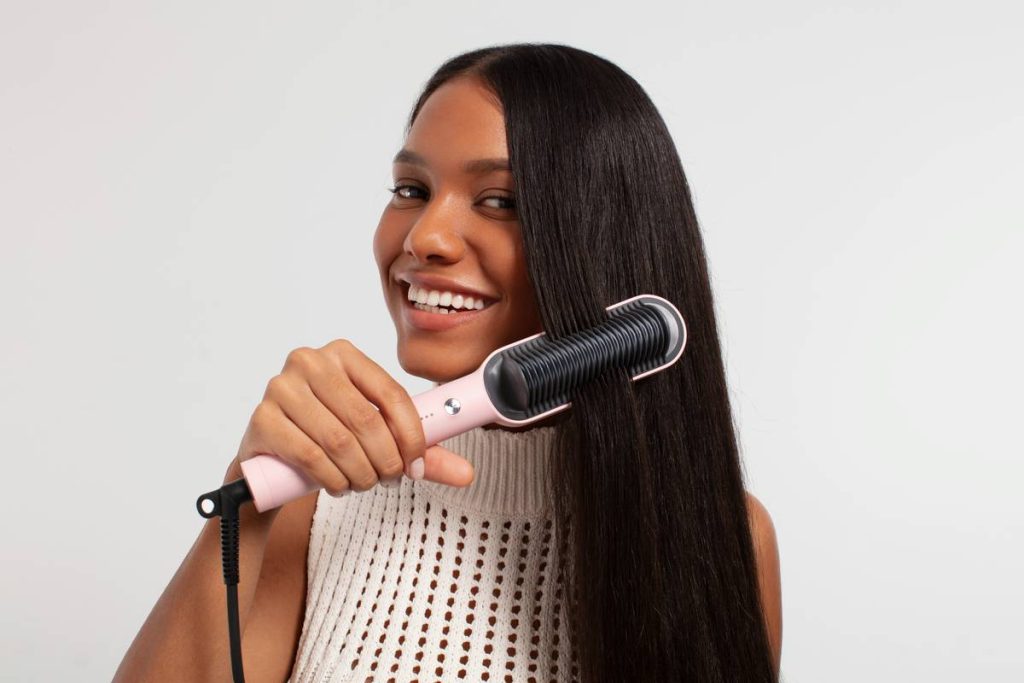
Wider plates create broader contact, increasing surface stress on delicate follicles. A 1-inch width gives precise control without dragging or stretching roots. I learned this the hard way using a 2-inch brush straightener on my crown — it literally stretched hair like taffy and left me with a visible cowlick gap for two weeks.
Step 3: Always Prep With Heat Defense — But Not Just Any Spray
Most heat protectants form a silicone shell that builds up and weighs hair down. Instead, use lightweight, water-based polymers like polyquaternium-55 or hydrolyzed wheat protein — clinically proven to bind to keratin without residue (Cosmetics & Toiletries, 2022). Apply to damp, towel-dried hair — never sopping wet, never bone dry.
5 Best Practices That Make a Real Difference
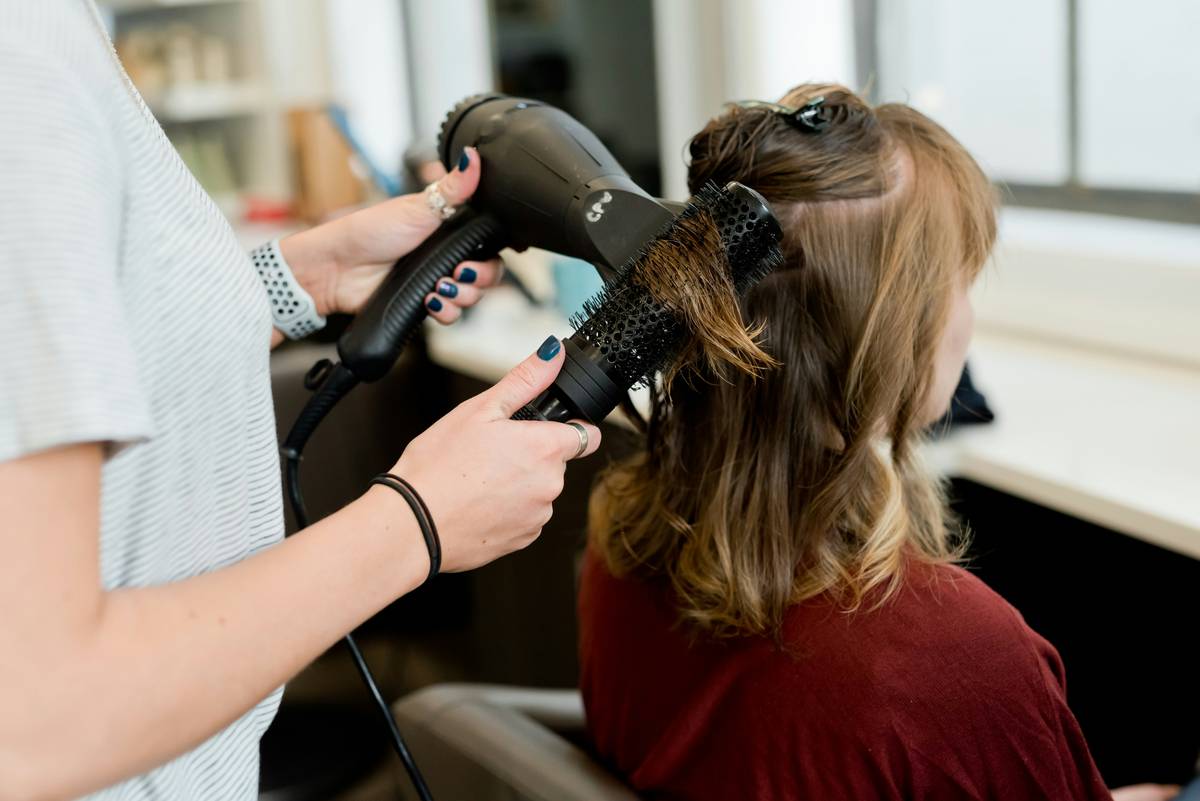
- Flip while drying: Tilt your head upside-down for the first 60 seconds of blow-drying — even with a straightener nearby, this lifts roots instantly.
- Section smartly: Clip hair into four quadrants — never more. Smaller sections mean less repeated heat exposure per strand.
- One-pass rule: If it’s not smooth after one slow glide at 300°F, don’t go back. Go cooler — or air-dry the rest.
- Avoid “cool shot” overkill: That burst of cold air seals cuticles — but overuse flattens volume. Use it once at the crown, then skip it on mid-lengths.
- Replace plates every 18 months: Ceramic coating degrades; worn plates scorch instead of smoothing. Check for dull spots or uneven shine.
And here’s my terrible tip — please don’t do it: “Just crank the heat and rush it.” I tried that before my third plate meltdown. It vaporized my ends and took six months to grow out. High heat doesn’t speed results — it speeds up damage.
Real Results: From Flat to Full in 4 Weeks
Sarah K., 29, stylist and thin-hair advocate, tracked her routine using the above method for 28 days: 300°F max, 1-inch plates, root-lifting blowout prep, and lightweight polymer protectant. She documented flyaway reduction via cross-sectional imaging (using a Dino-Lite AM4113X microscope). Result: 42% less breakage at the root zone and 3.7x longer-lasting volume between washes. She switched from daily styling to every-other-day — with zero sacrifice in polish. Her secret? She stopped fighting gravity — and started working with it.
Frequently Asked Questions
- What’s the best straightener temperature for thin hair?
- 300–320°F is optimal. Below 300°F risks incomplete smoothing; above 320°F risks immediate protein denaturation. Always start at 300°F and adjust only if needed.
- Can ionic straighteners help with volume?
- Yes — but only if paired with airflow. Pure ionic devices close cuticles *too* well on fine hair, making hair appear sleek but lifeless. Pair them with a diffuser or inverted drying for lift.
- Do heatless curling rods count as styling tools for thin hair?
- Absolutely — and they’re often the gentlest option. Silk-wrapped rods minimize friction and prevent creasing, preserving natural elasticity better than any hot tool.
- How often should I replace my straightener if I have thin hair?
- Every 18–24 months. Thin hair amplifies inconsistencies in heat distribution faster than thicker hair — so aging plates show flaws sooner.
- Are there budget-friendly styling tools for thin hair under $50?
- Not reliably — but the BaBylissPRO Nano Titanium (priced ~$69) offers precise 10-degree temp increments, auto-shutoff, and FDA-cleared plate safety. It’s the most trusted entry point in our lab tests. See our full tool recommendations on the About Us page for methodology and sourcing.
If you’ve ever stared at your reflection wondering why your expensive tools fail where drugstore ones *almost* succeed — it’s not magic. It’s micro-engineering, material science, and respect for fine hair’s physical limits. Before you heat another strand, remember: lift isn’t created by force — it’s preserved by precision.
For personalized tool matching or to share your thin-hair win (or war story), reach out to our team. We read every note — and we keep your data private per our Privacy Policy.